Chapter 1

ChatGPT is
Not a Doctor -duh!

Posted: September 17th, 2026

Driven by my stubborn “good girl” mindset and ChatGPT’s false promises, I spent months misinterpreting my body’s signals—only to realize I was blindly fighting two separate conditions at once.

01

The Barbed Wire Morning

My story is one big mess. When I first started writing about this journey, I still didn’t know the full story of what had been going on with my body, or what was still going on. There was only one part of the story I knew for sure: I’d been dealing with a long-term UTI. The other part, that I’d also been dealing with cytolytic vaginosis for over a year, was only confirmed a few months before I launched this blog.

The funny (well, not-so-funny) thing is that I actually started this whole journey by self-diagnosing cytolytic vaginosis. Then I spent months beating myself up for getting it wrong, convinced I’d been dealing with a UTI all along and had somehow talked myself into believing otherwise Turns out, a year later, that I hadn’t been entirely wrong. I’d been dealing with both.

That’s why a big part of my story is about forgiveness, specifically learning to forgive myself. I’m 99% sure that if I’d made different choices, things might not have got quite so out of hand. Of course, it’s easy to say that now, knowing what I know today. Back then, I was just trying to figure out what was happening to me.

Let’s rewind to June 1, 2025.

It’s a cliché that every nightmare begins on a day that initially feels perfect, but that’s exactly how it happened for me. I distinctly remember waking up with a slight stinging sensation down there. My period was due soon, so I assumed it was hormonal. I’d experienced something similar before my period in the past, and we all know what kind of tricks our bodies can play around that time. I didn’t think much of it. The day was still warm and sunny, and I enjoyed a lovely picnic in the park with a dear friend and some good food. By the time I got home, the discomfort had increased, but it still didn’t seem like anything worth worrying about.

Over the next three days, my eyebrows crept a little higher each morning as the discomfort persisted.

Then came June 4.

I tiptoed to the bathroom after waking up and felt like I was passing actual barbed wire. To top it off, there was a strange “odor” in the air, if you can even call it that. When I stepped out of the bathroom, my entire downstairs area was burning. I crouched in front of the couch, shocked and in tears, because sitting down was simply too uncomfortable.

And, naturally, because of Murphy’s Law, I was scheduled to work as a chaperone on a school field trip that day. It wasn’t my regular job; I was just helping out. But between my sense of duty and my natural people-pleasing tendencies, cancelling at the last minute wasn’t even an option in my mind. So I took a painkiller and hoped for the best.

Looking back, I honestly don’t understand why I didn’t at least consider a UTI as a possibility at the time. Walking out of the bathroom in a panic, I grabbed my phone to discuss the situation with my pal AI. And actually, it put a UTI diagnosis right at the top of the list.

But as for why my brain decided to latch onto a completely different explanation instead, we’ll get to that later. As I mentioned earlier, that explanation wasn’t wrong, just incomplete.

Miraculously, the pain and discomfort eased that morning, and I managed to get through the day. Over the next few days, I continued to feel better. The strange odor was gone, although a mild stinging sensation remained. However, it no longer seemed to happen mainly during urination. Instead, the burning tended to start afterwards, and it felt more localised in my intimate area rather than in my urethra.

When my period started, the discomfort almost completely disappeared, and I felt pretty good again.

I can’t quite remember whether I decided to consult ChatGPT again because of the changes in my symptoms around my period or whether I started looking for other explanations as soon as I felt better after that terrifying “barbed wire morning.”

What I do know is that a seed had been planted in my head, and my friend living in an alternate universe was more than happy to help it grow. This wasn’t a UTI after all, but cytolytic vaginosis.

From that moment on, no matter what symptoms I described, ChatGPT somehow found a way to link everything back to that one diagnosis. Even the unpleasant odor, which, spoiler alert, would make another appearance later, was confidently explained away as something completely normal with cytolytic vaginosis.

Months later, I called ChatGPT out on this, and it essentially admitted to talking nonsense and making “simplified assumptions.”
02

My Childhood Struggles with UTIs

Let me give you a bit of context as to why my brain was practically begging me to find an alternative explanation for what was going on. When I was little, around 4 to 6 years old, I suffered from chronic UTIs. I went through countless tests and examinations and was prescribed multiple rounds of antibiotics over the years. On top of that, my family even tried homeopathy for quite a while in the hope of getting rid of the infections. Eventually, the UTIs stopped. After those childhood struggles, I only had a UTI a handful of times over the next 20 years, all of which were typical “honeymoon” infections that cleared up in a few days.

So, my understanding of what a UTI was like was based entirely on my childhood experiences. What I was experiencing after that fateful June 1st felt completely different. I remember that, as a kid, the one symptom I could always count on was the constant urge to pee, even when my bladder was empty. This time, I didn’t have that feeling at all. I do remember the burning being pretty intense back then, too, but after that “barbed wire morning,” the stinging felt very clearly localised in my vagina rather than my urethra. On top of that, I’d never experienced symptoms that disappeared when my period started or fluctuated in intensity over days and weeks.

Because of all this, my brain decided it had to be something else. The possibility that I could have two things going on at once never even crossed my mind. Convinced I’d figured it out, I self-diagnosed with cytolytic vaginosis and cut out all acidic and probiotic foods from my diet. I also started using moisturising vaginal suppositories. I kept this up for about a week, and I actually started feeling better.

It was such a relief, especially since I had a week-long hiking trip to Lapland coming up, complete with tent camping. So, get ready for the next major mistake you can possibly make with symptoms like these: sleeping in a tent in cold, rainy weather…

03

My Brain

Before we go there, let me explain a bit about how my brain works, because you’re probably wondering why on earth I didn’t just go to a doctor to get a proper diagnosis. Especially considering I live in a country with free healthcare. To be honest, I feel ashamed of this, especially knowing how difficult and expensive it can be to get medical care in some parts of the world, even when people really need it.

The thing is, I tend to try to handle everything on my own before asking for help. Classic “good girl” syndrom: the girl who doesn’t want to bother anyone with her problems and prides herself on getting things done by herself. I have a relatively high pain tolerance and a habit of just “toughing things out.” On top of all that, I get a weird thrill out of solving my own problems; my brain finds it immensely rewarding.

To make matters worse, I wasn’t even working when all this mess started. I had been laid off a few months prior, but it had actually been my own choice to leave. You’d think that having all that free time would have been a blessing, giving me the space to take better care of myself. Paradoxically, I think it actually worked against me. If I had been going into an office at the time, I would have sprinted to a doctor immediately, because sitting through meetings with those symptoms would have been unbearable. But because I had so much free time, I decided to ‘take matters into my own hands’ and wait for my self-prescribed remedies to work their magic.

04

Damp Tents, Freezing Feet, and a Steep Decline

About two and a half weeks after my symptoms first started, I was actually feeling pretty okay, and our trip to Lapland finally kicked off. But when we arrived at our first picture-perfect campsite after driving hundreds of kilometres, I felt that stinging sensation creeping back. I tried my best to ignore it.

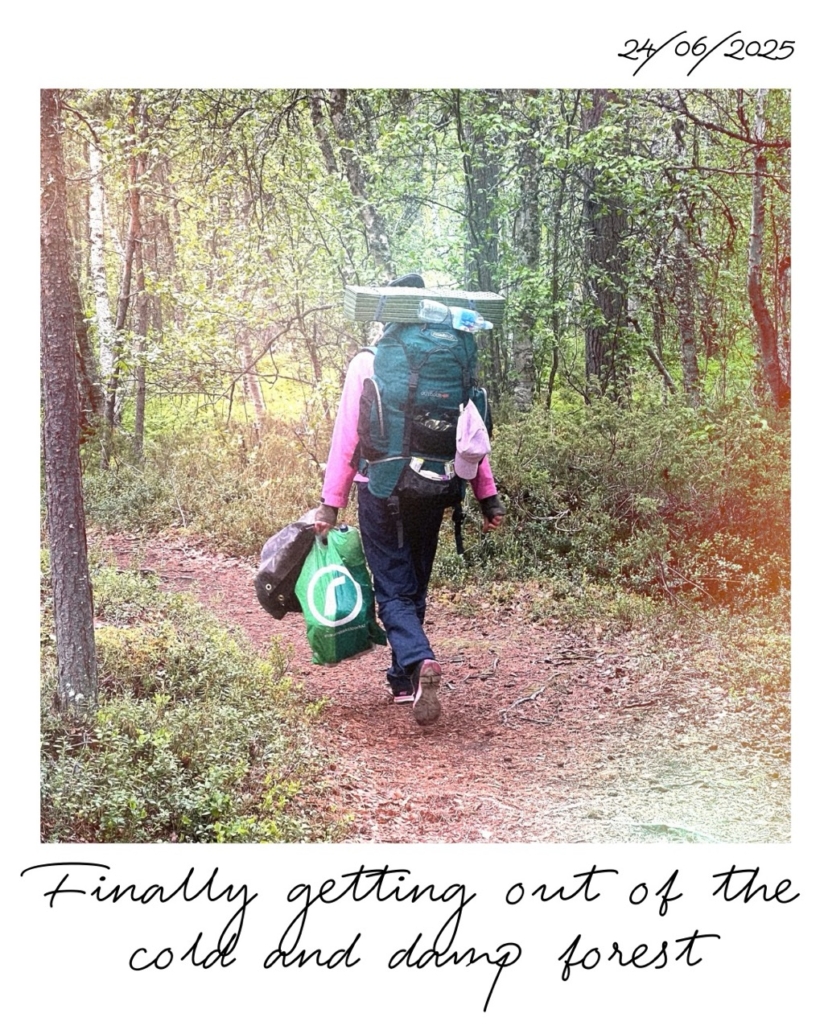
I spent that entire first night in the tent shivering. It might have been June, but temperatures still dropped to around 5°C (41°F) at night. My feet felt like blocks of ice, and no matter how many layers of socks I piled on, they just wouldn’t warm up. At 5:00 AM, my sweet partner made us tea on the camp stove (he was freezing too), and we drank it side by side, watching the mirror-like surface of the lake. It would have been such a beautiful memory if everything that followed hadn’t happened…

The next day, we hit the road again to reach our final destination.But by the time we crossed into the Arctic region, I was fighting back tears. My symptoms had become ten times worse overnight, worse than ever before. The pain and stinging would often flare up about a half an hour after I’d been to the bathroom. It came in waves: it would get insanely intense, then ease up again after about an hour. The discomfort was constant, but the intense, sharp pain kept coming and going.

05

Another Falling Domino

Yet another stunning campsite, and even a relatively warm night’s sleep. The next morning, when I went into the woods to pee, the stinging was milder, but definitely still there. This is where I want to emphasise the phrase “peeing in the woods” and bring the hygiene factor into play. It’s basically the next domino in this chain of bad decisions, knocking over the one right after it.

Most hiking areas in Finland are equipped with very decent dry toilets, but that’s as far as it goes. Obviously, there are no hot showers or proper washing facilities in the middle of the woods. But good hygiene is absolutely crucial when dealing with UTIs or any other intimate health issues. I didn’t have access to proper washing facilities for four full days. Wet wipes help, but only to a certain extent.

After hundreds of kilometres of driving, we finally reached our third campsite, where we had originally planned to start our 20 km hike. My symptoms kept bouncing up and down. I could constantly feel my partner’s worried eyes on me. I hadn’t told anyone else in the group a single thing. So the other five people, including my partner’s mother, stepdad, two sisters, and brother-in-law, thought I was completely fine. I worked ridiculously hard to maintain that illusion. Like I said, my ‘good girl’ syndrome meant I automatically put others before myself. I still do this to some extent.

While the others warmed themselves by the campfire in the evening, I would sneak into the tent every now and then to cry in secret because the stinging and discomfort were so overwhelming at times. But once again, after an hour or so, the “episode” would ease up. Crawling into the tent that night, I found it hideously cold again, with temperatures dropping to 1°C (34°F). I shivered and cried through the night while my partner stroked my hair to help me sleep. By morning, the weather had turned even worse. On top of the cold (around 10°C during the day), the rain started pouring down. The tent was damp inside, and so was everything in it.

After yet another freezing, rainy night, our group decided to skip the hiking trip altogether and find a campsite with cabins where we could sleep somewhere warm for the remaining nights. It was the absolute best news I could have heard. Arriving at the cabin felt like checking into a five-star hotel. It was warm, had real beds, and gave us access to a shower. I couldn’t have been happier, and I immediately felt so much better. But right before bed that evening, things shifted again, and I cried myself to sleep once more…

The next day, my period started, and my symptoms almost completely vanished along with it. This was precisely why the cytolytic vaginosis diagnosis kept making so much sense in my head (and I wasn’t wrong). With CV, the onset of menstruation is exactly what brings relief from that stinging sensation.

To be completely honest, it’s still a bit of a mystery to me how my body was behaving like that. Even if I had two separate issues going on at once, it’s fascinating how my period seemed to ease my UTI symptoms as well. Do you get what I mean?

Maybe one possible explanation is that the subtle, background stinging I still felt during my period was actually coming from the UTI, which menstruation couldn’t wash away. And that the excruciatingly intense burning I experienced at other times was caused by the UTI combined with the overly acidic vaginal environment associated with cytolytic vaginosis?

06

Gynecologist #1: „Do I Even Need to Examine You?“

Back home, I went to see a gynaecologist. I told her my story and described my symptoms, mentioning that I thought it might be cytolytic vaginosis. As much as doctors are supposed to rely on facts and ask the right follow-up questions, they’re human too, and their brains naturally look for shortcuts. Here comes lesson number 10,000…: never lead with your own diagnosis when you see a doctor. Start by describing your symptoms without telling them what you think is wrong. You can always bring up your theories later, after they’ve given their own assessment.

The doctor in question asked me if there was even any need to do a physical examination. I thought, well, I guess there’s no need if she agrees with my diagnosis anyway. So, no tests were done. She told me to douche with a baking soda solution, which happens to be the only known treatment option that could help with cytolytic vaginosis (meanwhile, they’re eagerly searching for a cure for male pattern baldness… just saying). I did as the doctor said, and for the first three days, it seemed to work like a charm—zero symptoms. But then they came back, along with tears. Douching with baking soda water when you actually (also) have a UTI is just another massive blunder. A baking soda solution dries things out and often washes away the good bacteria that help fight off the infection. It can actually even cause a chemical burn if you make the solution too strong.

After my symptoms worsened, I simply doubled down on my “no acidic, no probiotic foods” diet, hoping it would eventually help. The stinging sensation continued to come in waves. Some days were quite okay, while others were significantly worse. All of this, the fact that the baking soda seemed to work at first, the inconsistent symptoms, and the relief during menstruation, kept feeding my “cytolytic vaginosis” narrative. And as we know now, I wasn’t wrong.

I’ll also always have this question in the back of my mind: what if I only had cytolytic vaginosis in the beginning, and the douching caused the UTI? (Douching can increase the risk of infections, by the way.) But the fact that my urine had an unpleasant odour on that “barbed wire morning” suggests otherwise and points to a UTI being there from the beginning…

07

Changes in Symptoms

Gradually, though, my symptoms began to evolve. After peeing, I started feeling a strange tickling sensation in my bladder area. It wasn’t like the urge to sprint back to the toilet, but more of a tingling, nervous-tickle sensation. Dr. ChatGPT, whom I was unfortunately still consulting at the time, assured me this was completely normal for cytolytic vaginosis and gave me a very plausible explanation as to why. I honestly have no idea how I didn’t rush to a doctor with a urine sample, even after adding another symptom to the list. I usually think of myself as a fairly good critical thinker. But we’re all more easily influenced than we realise, especially when we trust ‘all-knowing’ AI. What’s even sadder is that even my mum begging me repeatedly to see my family doctor had no effect… Mothers are always right. And I am foolishly stubborn.

At one point, I decided to try an at-home vaginal pH test because cytolytic vaginosis is associated with an acidic vaginal environment. But the result came back completely normal, and a tiny seed of doubt finally crept into my mind. (A year later, the gynaecologist who ultimately confirmed my CV diagnosis told me that these over-the-counter pH tests can’t really be trusted.) But thank God the results were normal. Otherwise, I probably would have waited even longer before taking the next step and considering that something else might be going on with my body.

I decided to see yet another gynaecologist, this time one who came highly recommended. She listened to me and ran a thorough set of tests, including STI screening. Thankfully, my partner didn’t have to start making any awkward explanations, as all the results came back negative. But here’s what did turn up: my vaginal microflora was loaded with Lactobacillus bacteria. Now, without symptoms, that’s not a bad sign at all. Quite the opposite: Lactobacillus is a very welcome guest in the vaginal microbiome. When accompanied by symptoms, however, an overgrowth of these bacteria can point towards cytolytic vaginosis. To actually confirm it, though, you’d need a test such as a wet mount or vaginal smear to check for cell lysis… Which, for some reason, wasn’t done in my case back then.

When the doctor called with my test results and confirmed once again that there was no established cure for cytolytic vaginosis, I cried again for a good long while. She prescribed oestrogen to help strengthen the vaginal lining and hopefully ease my symptoms. Other than that, there was nothing left to do but wait and hope. Once again.

I completed the treatment, but my symptoms actually got worse. The stinging and discomfort intensified, and for the second time, I started feeling it more during urination, especially right at the end. I realised that this sensation was definitely in my urethra. On top of that, the tickling and slightly heavy sensation in my bladder grew stronger. I decided to pay for a private lab test myself. And this brings us to the moment I regret most in this whole story…

08

A Heartbreaking Blow

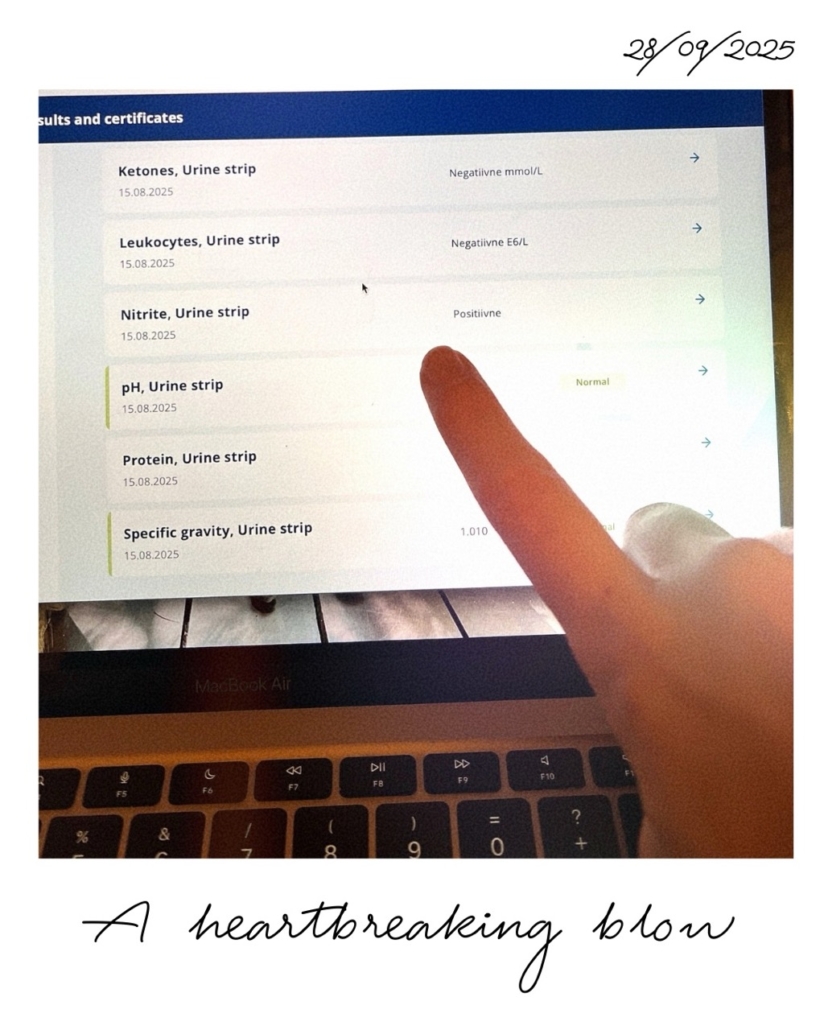
The lab where I had my test done processes almost all the samples sent by family doctors and clinics across the country. But as a private individual, you can also order many tests directly and pay for them yourself, with the results uploaded straight to your digital health portal. I ordered a standard urine dipstick test, and when I opened the results, everything looked completely normal to me.

Except it wasn’t. My nitrites were actually positive, and looking back, I honestly can’t explain why on earth I didn’t notice. But since it’s always comforting to find something else to blame, I have to mention that the positive result wasn’t highlighted in red or marked in any distinct way, which was really strange. Usually, when you get results from this lab, any abnormal readings are flagged in bright red or clearly highlighted.

Every other parameter on the dipstick test came back completely normal. That included my leukocytes, which are often elevated during a urinary tract infection. Spoiler alert: my leukocytes didn’t rise a single time throughout this entire ordeal. Which just goes to show, once again, that illness doesn’t always follow the textbook.

Months later, I looked at my old lab results again, just out of curiosity. When I spotted the positive nitrite result, my heart shattered.. The soul-crushing thought that I could have received proper treatment right then and there, and that maybe everything would have turned out differently, haunted me for months. But as it turned out, it would still take another three weeks for me to finally get my UTI diagnosis…

My story so far..

Chapter 1

ChatGPT is Not a Doctor – duh!

Driven by my stubborn “good girl” mindset and ChatGPT’s false promises, I spent months misinterpreting my body’s signals—only to realize I was blindly fighting two separate conditions at once.

Chapter 2

The Worst Time of My Life

From dismissive doctors and failed treatments to the overwhelming anxiety and fear that consumed my life, this is the story of hitting rock bottom.

Chapter 3

A New Perspective on Pain

Shifting my mindset around pain and learning to listen to my body changed everything, but the real breakthrough came when I stopped chasing quick fixes and let my cycle reveal the truth.

Chapter 4

Say Hello to My New Friend, Cytolytic Vaginosis

Finally getting official confirmation that my original self-diagnosis was right brought both confusion and an immense sense of relief

I’ve decided that all the crap I’ve been through—and am still dealing with to some extent—is meant to help me share my story with women all over the world.